Corrections Officer or Police Officer: Which Law Enforcement Career Is Right for You?
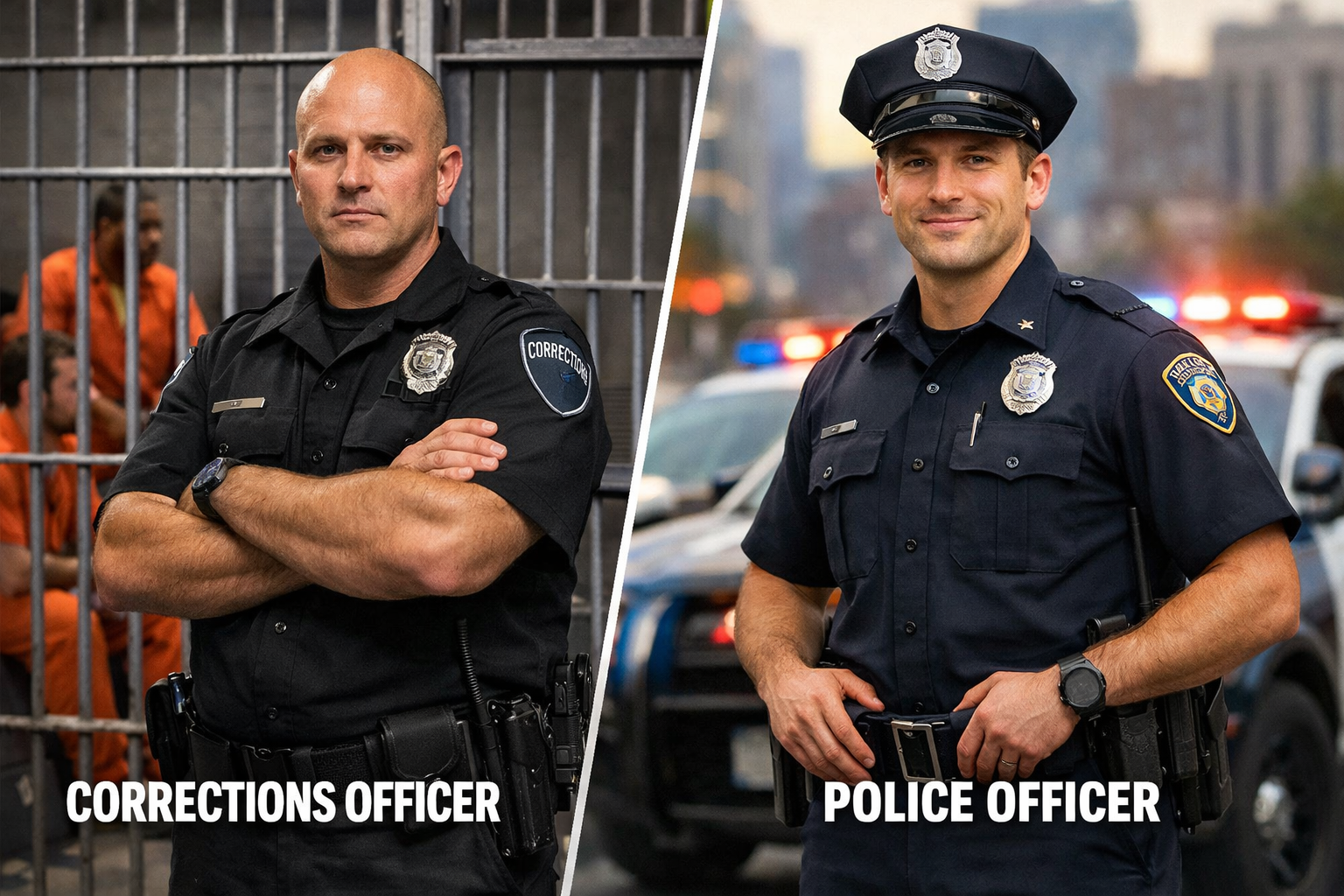
For many people interested in law enforcement, the first big decision isn’t whether to serve.
It’s where to serve.
Two of the most common entry points into the profession are becoming a corrections officer or a police officer. Both roles are essential to the criminal justice system, both involve public safety, and both require discipline, resilience, and professionalism.
But the day-to-day reality of these careers can look very different.
If you’re considering a career in law enforcement, understanding how these paths differ can help you decide which environment best fits your goals and personality.
What Corrections Officers Actually Do
Corrections officers work inside jails or prisons, supervising individuals who have been arrested or convicted of crimes.
Their primary responsibility is maintaining order and safety inside correctional facilities.
Daily duties can include:
Monitoring housing units and inmate activity
Conducting searches and security checks
Escorting inmates to court appearances or medical appointments
Responding to fights or disturbances
Documenting incidents and enforcing facility rules
Unlike police officers, corrections staff typically work in a controlled environment where movement, routines, and procedures are structured.
But that doesn’t mean the job is easy.
Correctional facilities can be high-stress environments where officers must constantly manage tension, monitor behavior, and maintain authority while interacting with incarcerated individuals for long periods of time.
What Police Officers Do on Patrol
Police officers operate in a much less predictable environment.
Patrol officers respond to calls for service in the community, enforce laws, investigate crimes, and assist the public in emergencies.
A typical shift may involve:
Traffic stops
Domestic disturbance calls
Criminal investigations
Medical emergencies
Crash scenes
Community interactions
Every call is different, and officers often have to make quick decisions in situations that can escalate rapidly.
Unlike corrections work, policing involves constant movement and changing environments—from quiet neighborhoods to chaotic emergency scenes.
For people who thrive on variety and problem-solving under pressure, patrol work can be extremely rewarding.
Work Environment: Inside vs. Outside
One of the biggest differences between these careers is the work environment.
Corrections officers work inside secured facilities.
Their environment is structured, controlled, and heavily procedural. Officers interact with the same inmate population regularly and become familiar with facility routines.
Police officers work in the community.
Their workplace includes streets, homes, businesses, highways, and public spaces. Officers deal with a wide range of people and situations during every shift.
Neither environment is necessarily easier—it simply requires different skills and personalities.
Stress and Safety Considerations
Both careers come with safety risks, but the nature of those risks differs.
Corrections officers may face:
Inmate assaults
Group disturbances
Manipulation or intimidation by inmates
Long shifts in high-tension environments
Police officers may face:
Armed suspects
High-speed vehicle pursuits
Unpredictable encounters with the public
Dangerous emergency scenes
In corrections, tension tends to build gradually.
In policing, dangerous situations can develop quickly and without warning.
Understanding how you handle stress is an important part of choosing the right career path.
Training Requirements
Training requirements vary by state and agency, but both careers involve formal academy training.
Police academies typically cover:
Criminal law and procedures
Firearms training
Defensive tactics
Emergency vehicle operations
Investigation techniques
Corrections academies focus more heavily on:
Institutional security procedures
Inmate management and communication
Use-of-force policies
Crisis intervention
Facility operations
Both careers require ongoing training throughout an officer’s career.
Career Advancement Opportunities
Both corrections and policing offer long-term career paths with advancement opportunities.
Corrections officers may advance to roles such as:
Sergeant or lieutenant
Tactical response teams
Intelligence or investigations inside facilities
Facility administration
Police officers may pursue specialized assignments including:
Detectives
K9 units
SWAT teams
Traffic enforcement
Federal or investigative task forces
For some people, corrections can also serve as a stepping stone into policing, though many professionals build long and successful careers within corrections.
Personality Fit: What Kind of Work Do You Prefer?
Choosing between corrections and policing often comes down to personal preference.
You may prefer corrections work if you:
Prefer structured environments
Are comfortable enforcing rules consistently
Work well managing long-term behavioral dynamics
Prefer a controlled facility setting
You may prefer policing if you:
Enjoy problem-solving in unpredictable situations
Want a more varied daily routine
Are comfortable interacting with the public regularly
Prefer working in the community
Neither path is better. They simply require different strengths.
The Bottom Line
Both corrections officers and police officers play critical roles in the justice system.
Police officers handle law enforcement in the community.
Corrections officers maintain safety and order inside detention facilities.
Each career requires professionalism, resilience, and a commitment to public service.
If you’re considering either path, the best approach is to research agencies in your area, speak with professionals already working in the field, and think carefully about the type of work environment that fits your goals.
Because choosing a law enforcement career isn’t just about the badge.
It’s about the job you’ll do every day wearing it.
Frequently Asked Questions
What is the difference between a corrections officer and a police officer?
Corrections officers work inside jails or prisons supervising individuals who have been arrested or convicted of crimes. Their role focuses on maintaining security, enforcing facility rules, and ensuring the safety of staff and inmates within a controlled environment.
Police officers work in the community. They enforce laws, respond to emergency calls, conduct investigations, and interact with the public in a wide variety of situations.
Both careers are part of the criminal justice system but operate in very different environments.
Is it easier to become a corrections officer or a police officer?
Requirements vary by state and agency, but in many areas corrections officer positions have fewer entry requirements than police officer roles.
Police departments often require more extensive academy training, background investigations, and physical testing. Corrections agencies may have shorter academies and slightly different hiring standards.
However, both careers still require strong background checks, training, and the ability to handle stressful situations.
Can corrections officers become police officers later?
Yes. Many people begin their careers in corrections and later transition into policing.
Working in corrections can provide valuable experience in areas such as conflict management, situational awareness, and use-of-force decision-making. Some agencies even prefer applicants who already have corrections experience.
That said, many professionals also build long and successful careers within corrections without moving into patrol work.
Which career is more dangerous: corrections or policing?
Both careers involve safety risks, but the types of risks are different.
Corrections officers may face threats such as inmate assaults, disturbances inside facilities, or prolonged exposure to high-stress environments.
Police officers may encounter armed suspects, vehicle pursuits, dangerous calls for service, or unpredictable encounters with members of the public.
Each job requires training, awareness, and strong safety practices.
Do corrections officers carry firearms?
In many correctional facilities, officers working inside secure housing units do not carry firearms because of the risk that weapons could be taken by inmates.
However, officers working in perimeter security, transport units, or specialized roles may carry firearms depending on the agency and assignment.
Police officers typically carry firearms as part of their standard duty equipment.
What kind of training do police officers receive?
Police academy training typically covers a wide range of law enforcement topics, including:
Criminal law and procedures
Firearms and defensive tactics
Emergency vehicle operations
Investigations and evidence handling
Community policing strategies
Crisis response and de-escalation
Academy programs vary but often last four to six months, followed by field training with experienced officers.
What kind of training do corrections officers receive?
Corrections academy training focuses on managing security inside detention facilities.
Training often includes:
Institutional safety procedures
Inmate supervision and communication
Defensive tactics and restraint techniques
Emergency response inside facilities
Use-of-force policies
Report writing and documentation
The goal is to prepare officers to manage a controlled environment safely and professionally.
Which job has more variety day to day?
Police officers typically experience more variety in daily duties because they respond to different calls for service throughout the community.
Corrections officers often work in more structured environments where routines and procedures remain consistent. However, incidents inside facilities can still change the pace of a shift quickly.
People who enjoy unpredictable situations may prefer patrol work, while those who prefer structured environments may find corrections a better fit.
How do you decide which law enforcement career is right for you?
Choosing between corrections and policing depends on personal preferences, career goals, and the type of work environment you prefer.
Speaking with professionals in both careers, researching local agencies, and learning about daily job responsibilities can help you make a more informed decision.
Both roles are important to public safety and offer meaningful careers in the criminal justice system.