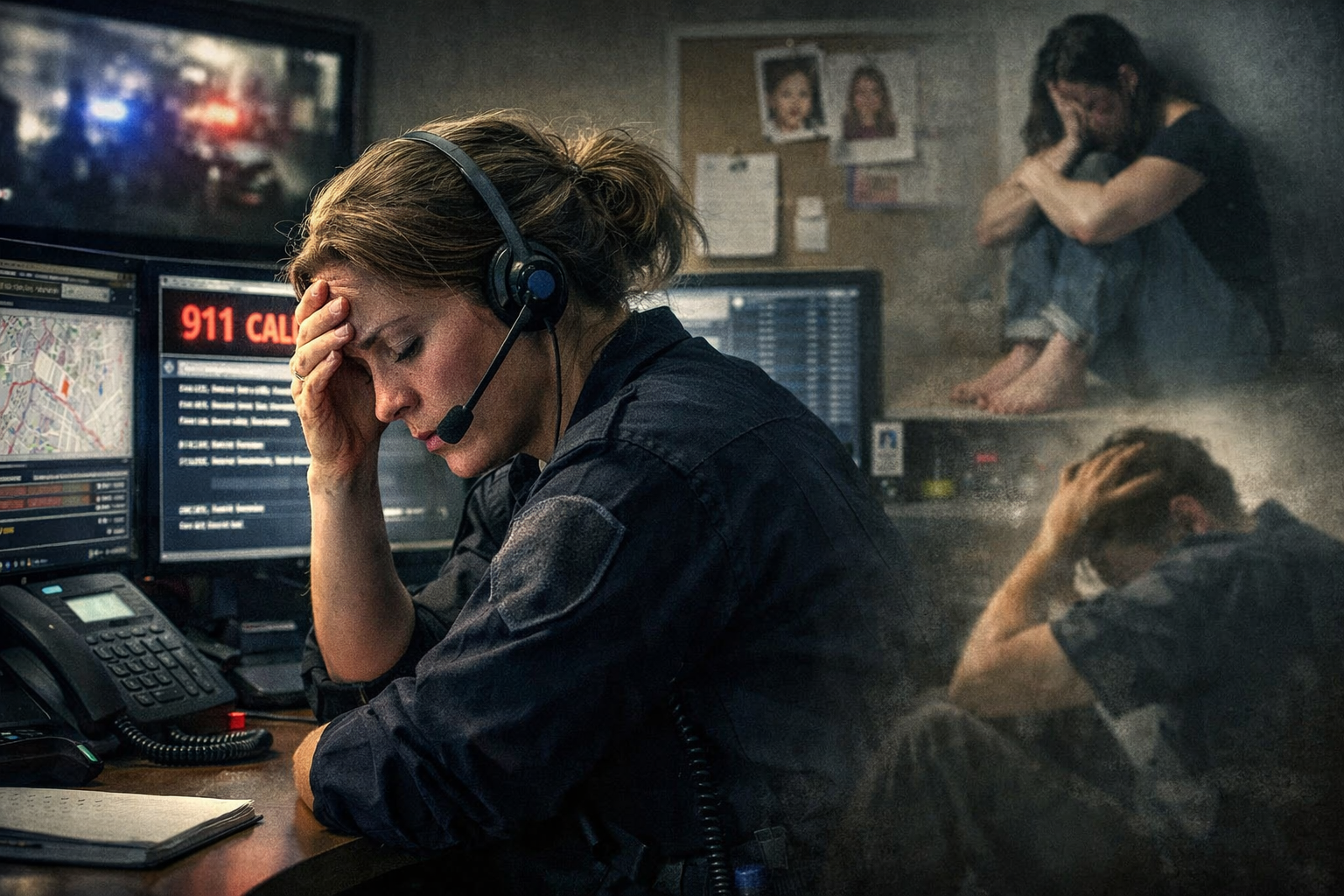
Secondary Trauma in Dispatch: The Role No One Talks About
They're the first voice a person in crisis hears. They stay on the line with suicidal callers, listen to domestic violence victims whisper from closets, and talk parents through the worst moments of their lives. Then they pick up the next call. Dispatchers carry the psychological weight of every shift largely without the support structures that exist for field personnel—and the research shows the damage is real. This piece breaks down Secondary Traumatic Stress in emergency communications, why the dispatch environment compounds the risk, and what departments can do to stop treating an invisible wound like it doesn't exist.