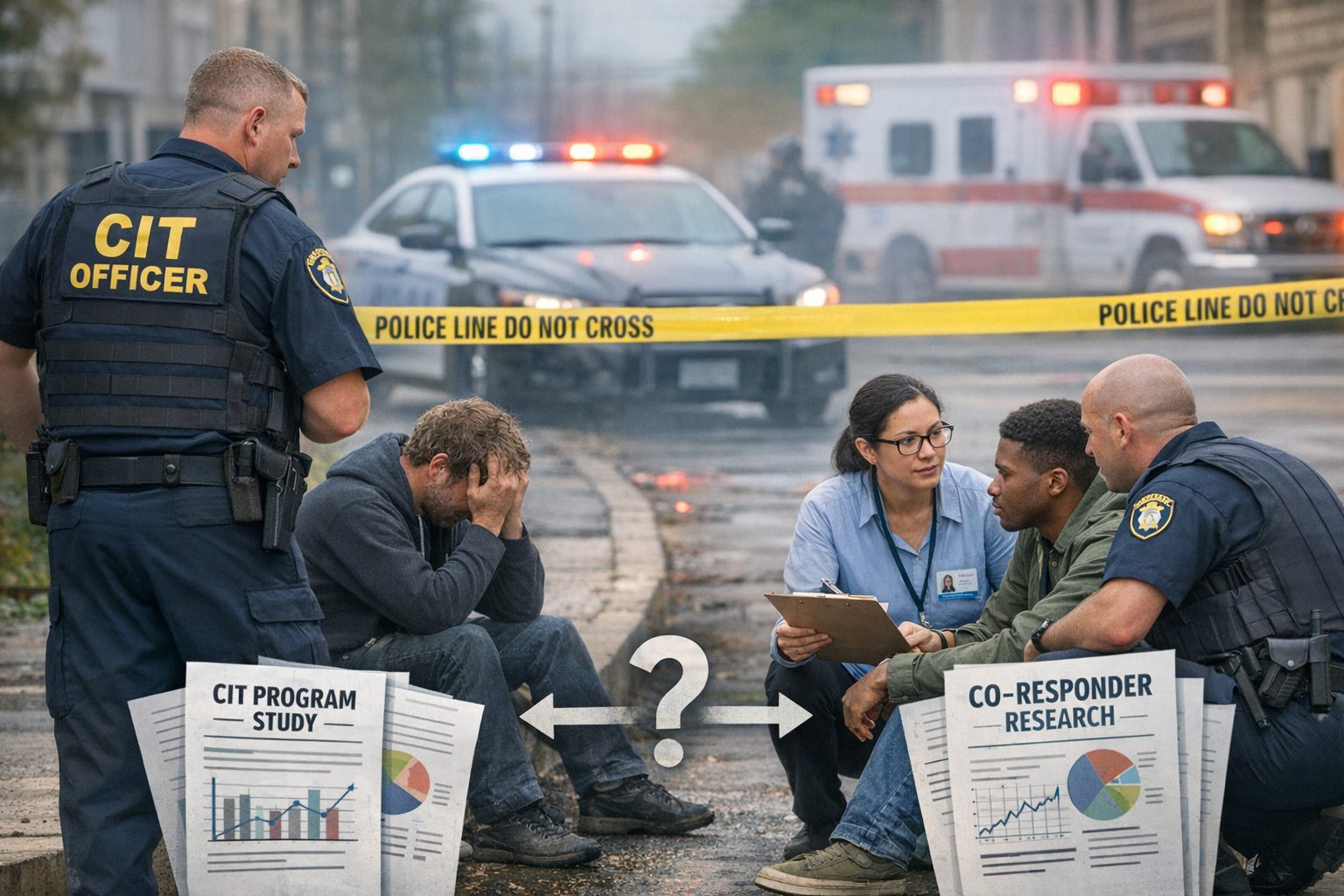
CIT vs. Co-Responder Models: What the Data Actually Shows
Two models dominate the conversation around mental health crisis response: Crisis Intervention Teams, which train officers to handle psychiatric calls, and co-responder programs, which put a clinician in the response itself. Both have genuine evidence behind them. Both have real limitations the research is increasingly clear about. And neither works well without the infrastructure, partnerships, and honest local assessment that determines whether any program succeeds or fails. This piece breaks down what the data actually shows—where each model holds up, where it doesn't, and what the research suggests about matching response type to call type in a field that too often treats a complex systems question as a simple either/or.