"He Gets This Look": How to Hear What She's Describing and Why It Matters for Threat Assessment
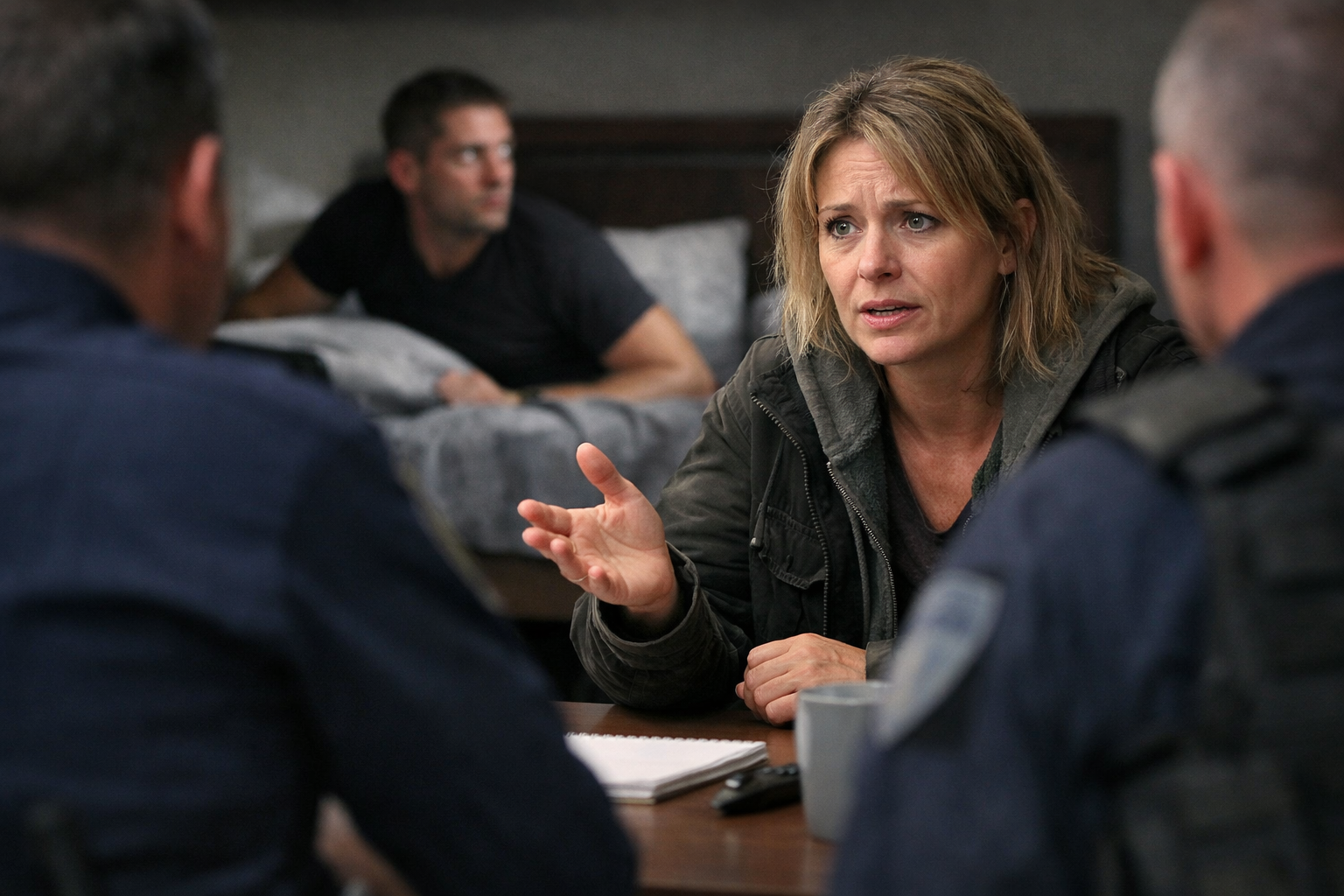
She's standing in the kitchen, or on the porch, or in the driveway with her arms crossed over her chest. He's calm now. Cooperative, even. And she is trying to explain something to you that she has never had words for — something she has lived with and been terrified by and rationalized and returned to and been terrified by again.
She says something like: "He just gets this look."
Or: "It's like he's not there anymore."
Or: "He was just lying there but he wasn't sleeping — I could tell he wasn't sleeping. He kept coming up and looking around and then going back down. It was like he was tracking something."
Or, quieter: "It's like being in a room with an animal."
She does not have clinical language. She has not read behavioral science literature. What she has is years of living inside a threat environment, developing an exquisitely calibrated nervous system attuned to his every shift — because her safety, and possibly her life, has depended on reading him accurately.
She is not being dramatic. She is giving you a field report. Your job is to know how to receive it.
Why Her Language Sounds Imprecise But Isn't
Victims of chronic domestic violence develop what researchers sometimes call hypervigilant threat monitoring — a state of continuous, automatic scanning of the abuser's behavior, affect, and physiological signals for early warning of danger. This is not a choice. It is a nervous system adaptation to a prolonged threat environment.
Over time, this monitoring becomes extraordinarily fine-grained. She can read the specific way he sets down a glass. The particular quality of silence that precedes violence. The change in his breathing. The way his eyes go when something has shifted in him that she cannot name but has learned to fear.
What she cannot always do is translate that finely calibrated perception into language that sounds credible to someone who hasn't lived it. So she reaches for metaphor. She reaches for animal comparisons. She says "it's like he's not human"or "he goes somewhere else" or "his eyes go dead" or "he was just lying there listening to everything."
These are not exaggerations. They are her best available vocabulary for describing a specific cluster of observable behaviors that you need to understand.
The Behavior She Is Describing: Predatory Vigilance State
What she is trying to tell you about has a name in behavioral science. It is sometimes called a predatory vigilance state— a mode of threat-oriented environmental monitoring that is qualitatively different from normal alertness, normal rest, and normal fear response.
Here is what it looks like from the outside, which is where she has been watching it from.
He is lying down but not resting
The posture is horizontal but nothing else about it reads as relaxed. In genuine rest, the body downregulates — muscle tone decreases, breathing slows and deepens, the face softens, the eyes close or go unfocused. None of that is present. He is lying down the way a predator lies in wait: conserving energy while maintaining full environmental awareness. The body is still. The nervous system is not.
She may describe this as: "He was just lying there but I knew he wasn't asleep." "He was too still." "I could feel him listening." "It didn't feel like resting — it felt like waiting."
His eyes are open and not blinking
Not the soft, heavy-lidded gaze of someone drowsy. Wide, fixed, unblinking. Oriented not at any specific thing but at the room — at the environment as a whole. Tracking without appearing to track.
She may describe this as: "His eyes were just open, staring." "He had that look — like he's looking at everything at once.""His eyes go weird — wide and kind of empty." "It's like the lights are on but he's gone."
He comes up in full-body movements, not head turns
This is one of the most distinctive and disturbing behavioral features, and it is the one she is most likely to struggle to describe because it violates such a basic expectation of how humans move. When a resting person hears something, they turn their head. Maybe they prop up on an elbow. The response is partial, economical, social.
What she is describing is different. The entire upper body rises as a unit. There is no gradual, social quality to the movement. It is mechanical, rapid, and total — torso, shoulders, and head rotating together like a single structure orienting toward input. He scans. Then he goes back down. Without a word. Without acknowledging anyone in the room.
She may describe this as: "He kept sitting up and looking around." "He would just suddenly come up and look around the whole room — not just turn his head, like his whole body." "It was like watching a robot or something." "He was doing this thing where he'd get up and scan the room and then just lie back down, over and over." "It was like he was checking something." "He reminded me of an animal — like a dog that hears something outside."
He does not explain or acknowledge the behavior
This is critical. A person who is simply restless, anxious, or having trouble sleeping will typically acknowledge it — "sorry, I keep hearing something outside" or "I can't get comfortable." There is a social layer. The behavior exists in relationship to the people in the room.
In the predatory vigilance state, that social layer is absent. He is not performing these movements for anyone. He is not aware of them as behaviors that require explanation. He is operating in a mode where the environment is the only relevant input and the people in the room — including her — are either irrelevant or are themselves part of what is being monitored.
She may describe this as: "He didn't say anything — he just kept doing it." "He acted like I wasn't even there." "I asked him what was wrong and he didn't answer — just lay back down." "It was like he forgot I was in the room."
What This State Signals
Understanding what produces this behavioral cluster changes how seriously you take the scene in front of you.
Extreme autonomic arousal without the social display of fear
Normal human fear has a social component. People who are scared look scared — they seek reassurance, they explain themselves, they make eye contact, they orient toward other people in the room. The predatory vigilance state does not look like fear because it is not fear in the conventional sense. It is a state of readiness that has moved past the social-emotional processing of threat into pure environmental monitoring.
This is physiologically significant. The sympathetic nervous system is highly activated — hence the wide eyes, the suppressed blink reflex, the mechanical full-body movements — but the prefrontal cortex, which handles social cognition and emotional regulation, has been largely taken offline. He is not thinking about the situation. He is responding to it at a level below conscious deliberation.
This is the state that precedes the most dangerous violence — not because he has decided to act, but because the decision-making architecture has been bypassed.
Dissociation from the social environment
When she says "it's like he's not there" or "he goes somewhere else," she is describing something neurologically real. In extreme autonomic arousal states, people dissociate from their immediate social environment. They stop processing the room as a social space containing people with feelings and relationships. They process it as a threat environment containing obstacles and targets.
She has learned — through experience, not theory — that when he goes to this place, the normal rules of interaction no longer apply. Talking to him doesn't work. Reasoning with him doesn't work. The person she knows how to navigate is not the person currently inhabiting that body. That is not metaphor. That is an accurate description of what is neurologically occurring.
A history of this state preceding violence
She is not describing this to you because it happened once and seemed odd. She is describing it because she has watched it happen, and she has learned what comes after it. The predatory vigilance state she is describing is almost certainly part of an established cycle — a recognizable escalation pattern that she has mapped, even if she has never articulated the map to anyone.
When she tells you about the lying-down scanning behavior, she is telling you about the warning sign she has learned to fear. Not the violence itself — the state that precedes it. That is an extraordinarily valuable piece of threat intelligence, and it is sitting in front of you in a driveway trying to find the right words.
How to Hear Her on Scene
Don't wait for precise language
She will not say "he entered a predatory vigilance state." She will say "he gets this look" or "something comes over him"or "he was doing this weird thing." Your job is to ask questions that help her describe the observable behavior underneath the impression.
"Can you describe what his face looked like?" "What were his eyes doing?" "Was he moving — what kind of movements?""Did he say anything when he did it, or was he silent?" "Has he done this before? What usually happens after?"
That last question is the most important one on scene. She has longitudinal data you don't have. She knows what this state predicts in this specific man. Ask her what comes after. Then listen carefully to what she tells you.
Take the animal comparisons seriously
When a victim compares her abuser's behavior to an animal — "like a predator," "like something switched," "like a different creature" — she is not being hysterical or figurative. She is telling you that his behavior crossed outside the range of normal human social behavior in a way her nervous system registered as a categorical threat. That registration is data.
Animal comparisons from DV victims in threat descriptions consistently correlate with high-lethality situations in the research literature. When she reaches for that language, the lethality assessment needs to go up.
Believe the pattern even if you can't see it now
He is calm now. He is cooperative now. He is possibly charming now. That is entirely consistent with everything she is describing — the ability to rapidly shift out of the predatory vigilance state when the environment changes is part of the same regulatory capacity that produces it. His presentation to you is not evidence that her description is false. It is evidence that the threat environment, from his nervous system's perspective, has temporarily resolved.
She knows this. She has watched him do exactly this — snap back into normal, social, reasonable behavior — probably many times. It may be part of why she has struggled to report before. She knows how it looks. She knows what you're seeing right now. She came forward anyway.
Document her descriptions verbatim
Do not summarize. Do not translate her language into something that sounds more clinical or more credible. Write down what she said. "He was lying there with his eyes wide open and kept coming up and turning his whole body around to look at the room and then lying back down without saying anything. She stated it felt like being in a room with an animal."
That language — her language — is part of the threat picture. It belongs in the record exactly as she said it.
The Lethality Implications
The behavioral cluster she is describing — predatory vigilance state, full-body mechanical scanning, dissociation from social environment, wide unblinking eyes, silence — sits at the high end of the domestic violence threat spectrum.
This is not a man who loses his temper. Temper loss has a social, emotional, escalating quality — it builds, it peaks, it involves affect, it is often followed by remorse. What she is describing is something colder and more dangerous: a state of predatory readiness in which normal social and emotional processing has been suspended and the environment is being monitored for tactical information.
This distinction matters enormously for lethality assessment. The research on intimate partner homicide consistently identifies controlled, predatory violence as significantly more lethal than reactive, emotional violence. A man who rages and strikes in the heat of an argument is dangerous. A man who enters a silent, scanning, dissociated readiness state is operating at a different level of threat entirely.
She has been living with this. She has been reading it, navigating it, surviving it. And she found the words to tell you about it.
Make sure those words end up somewhere that protects her.
ThreatReady LE publishes weekly intelligence on threat recognition and trauma-informed practice for law enforcement. Subscribe free at threatreadyle.com.
Frequently Asked Questions
She's describing something really strange — how do I know she's not exaggerating or being dramatic?
The language victims use to describe predatory vigilance behavior almost always sounds dramatic to someone who hasn't witnessed it, because the behavior itself falls outside the range of normal human social conduct. When she says it felt like being in a room with an animal, or that he went somewhere else, she is not reaching for effect. She is reaching for the most accurate description she has available. Her nervous system has been calibrated to this specific man's escalation pattern for months or years. The strangeness of her description is not a credibility problem — it is a signal that what she witnessed was genuinely outside the range of normal behavior. Take it seriously precisely because it sounds extreme.
He seems completely fine now. Doesn't that mean she might be misreading the situation?
No — and this is one of the most important things to understand about this behavioral state. The ability to rapidly shift back into normal, social, cooperative presentation when the environment changes is entirely consistent with everything she is describing. His calm presentation to you is not evidence that her account is inaccurate. It is evidence that his nervous system has registered the threat environment as temporarily resolved. She has almost certainly watched him make exactly this shift before — snap back into normal, reasonable behavior — and it may be part of why she has hesitated to report. She knows how he looks right now. She came forward anyway.
What's the difference between this and someone who is just anxious or having a bad night?
Anxiety has a social quality. An anxious person seeks reassurance, explains themselves, makes eye contact, orients toward other people in the room. They are aware of their own state and typically communicate it in some way — directly or indirectly. The predatory vigilance state has none of that social texture. He is not performing the scanning behavior for anyone in the room. He does not explain it, acknowledge it, or seem aware of it as something that requires social management. The absence of that social layer is the key distinguishing feature. Anxiety keeps you connected to the people around you. This state removes you from the social environment entirely.
What does she mean when she says his whole body turned instead of just his head?
She is describing a specific motor pattern that emerges in extreme autonomic arousal states. Normal social head-turning is a partial, economical movement — we turn our head because the rest of our body doesn't need to be involved. In high-activation predatory states, the body organizes itself as a single orienting unit. The torso, shoulders, and head rotate together, rapidly and mechanically, to bring the full sensory system to bear on the input. It looks robotic or animal because it bypasses the casual, socially modulated quality of normal human movement. When she describes it as mechanical or weird, she is accurately describing a motor pattern that is genuinely outside the range of normal human social movement.
She said "it's like being in a room with an animal" — should I take that literally?
As a threat indicator, yes. Animal comparisons in victim descriptions of abuser behavior are not throwaway metaphors. They represent her nervous system's categorical assessment that his behavior crossed outside the range of normal human social conduct. Research on high-lethality domestic violence situations consistently surfaces this kind of language from survivors — descriptions of the abuser as predatory, inhuman, or animal-like in a specific behavioral state. When a victim reaches for that comparison, the lethality assessment needs to increase. She is not being dramatic. She is being precise in the only language available to her.
What does she mean when she says he was "listening" even though he wasn't moving?
She is describing the quality of his stillness — which is active, not passive. In a predatory vigilance state, the body goes still not because the nervous system has downregulated but because stillness maximizes environmental information intake. He is not moving because movement generates noise that interferes with monitoring. She has learned to read that specific quality of stillness — too controlled, too oriented, too alert — as distinct from rest or relaxation. When she says she could feel him listening, she is describing a real perceptual read of his physiological state. She is right that it is different from sleep. It is different from rest. Trust her read.
What questions should I ask her to get better information about what she saw?
Ask behavioral, descriptive questions rather than interpretive ones. Not "did he seem angry?" but "what did his face look like?" Not "was he acting strange?" but "what was he doing with his body?" Specifically useful questions include: What were his eyes doing? Was he making any sounds or was he silent? Did he turn his head or did his whole body move? Did he say anything when he came up or did he just lie back down? Has he done this before — and what usually happens after? That last question is the most valuable one on scene. She has longitudinal data on this specific man's escalation pattern. Ask her what this state predicts. Then listen to exactly what she says.
What does it mean that he wasn't talking during any of this?
The silence is part of the picture, not incidental to it. In normal human distress — even severe distress — people tend to vocalize. They explain, they complain, they ask questions, they narrate their state in some way. The absence of vocalization during the scanning behavior she is describing signals that social communication has been suspended. He is not processing the room as a social environment requiring interaction. He is processing it as a threat environment requiring monitoring. The silence is the behavioral marker of that shift. When she notes that he didn't say anything — just came up, scanned, went back down — she is identifying one of the clearest indicators that this was not normal restlessness or anxiety.
Should I do a lethality assessment on this call even if there's no physical violence to report?
Yes — and the bar for doing so should be lower than many officers apply in practice. A formal lethality assessment does not require a physical assault to have occurred. The behavioral pattern she is describing — predatory vigilance state, dissociation from social environment, established escalation cycle she has learned to recognize and fear — represents meaningful threat intelligence that belongs in a lethality screening. Most validated lethality assessment tools include questions about fear, about escalation, and about the victim's own assessment of danger. Her answer to "do you think he might seriously hurt or kill you?" after describing this behavior is the most important data point on scene. Ask it. Document the answer.
What if she minimizes it or says she might have been overreacting?
Document the original description regardless. The minimization that often follows a detailed account is a predictable feature of DV victim interviews — not evidence that the original account was inaccurate. She may minimize because she is scared of consequences, because she has practiced making it smaller in order to survive living with it, or because your visible reaction made her second-guess herself. Write down what she described before the minimization. Note that she subsequently minimized. Both pieces of information belong in the record. The original account, before social pressure shaped it, is the one with the highest signal value.