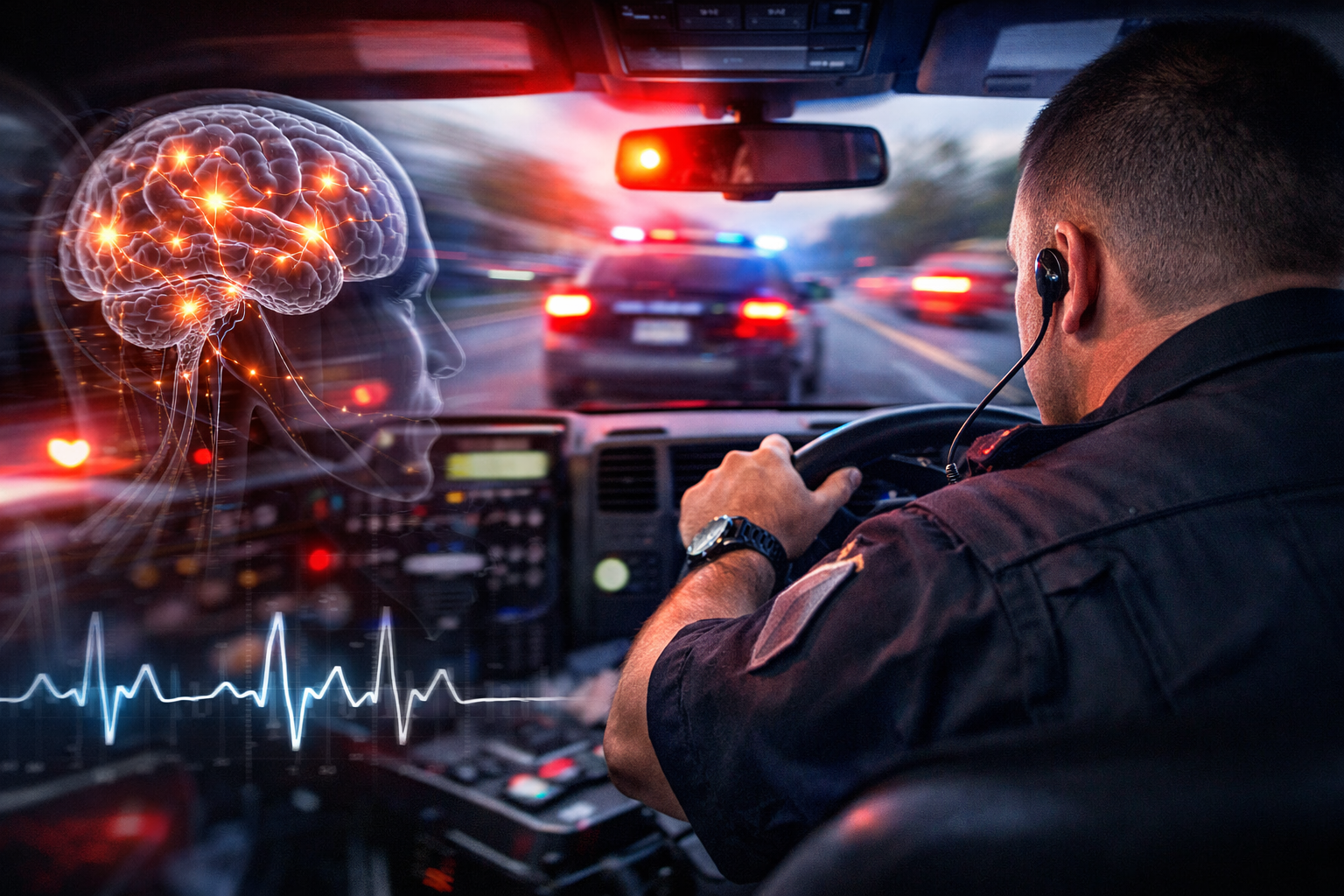
Code 3 and the Brain: What the Neuroscience of Emergency Response Driving Actually Tells Us
The moment an officer hits lights and sirens, their brain and body change in ways that feel like readiness but can function like impairment. Elevated arousal, perceptual compression, divided attention, siren hype — the cognitive and physiological profile of a Code 3 response is one of the least-discussed risk factors in officer safety. Here's what the research says, and what it means for training and the road.