The Night Shift Tax: What Rotating Schedules Actually Do to Officer Health and Cognition
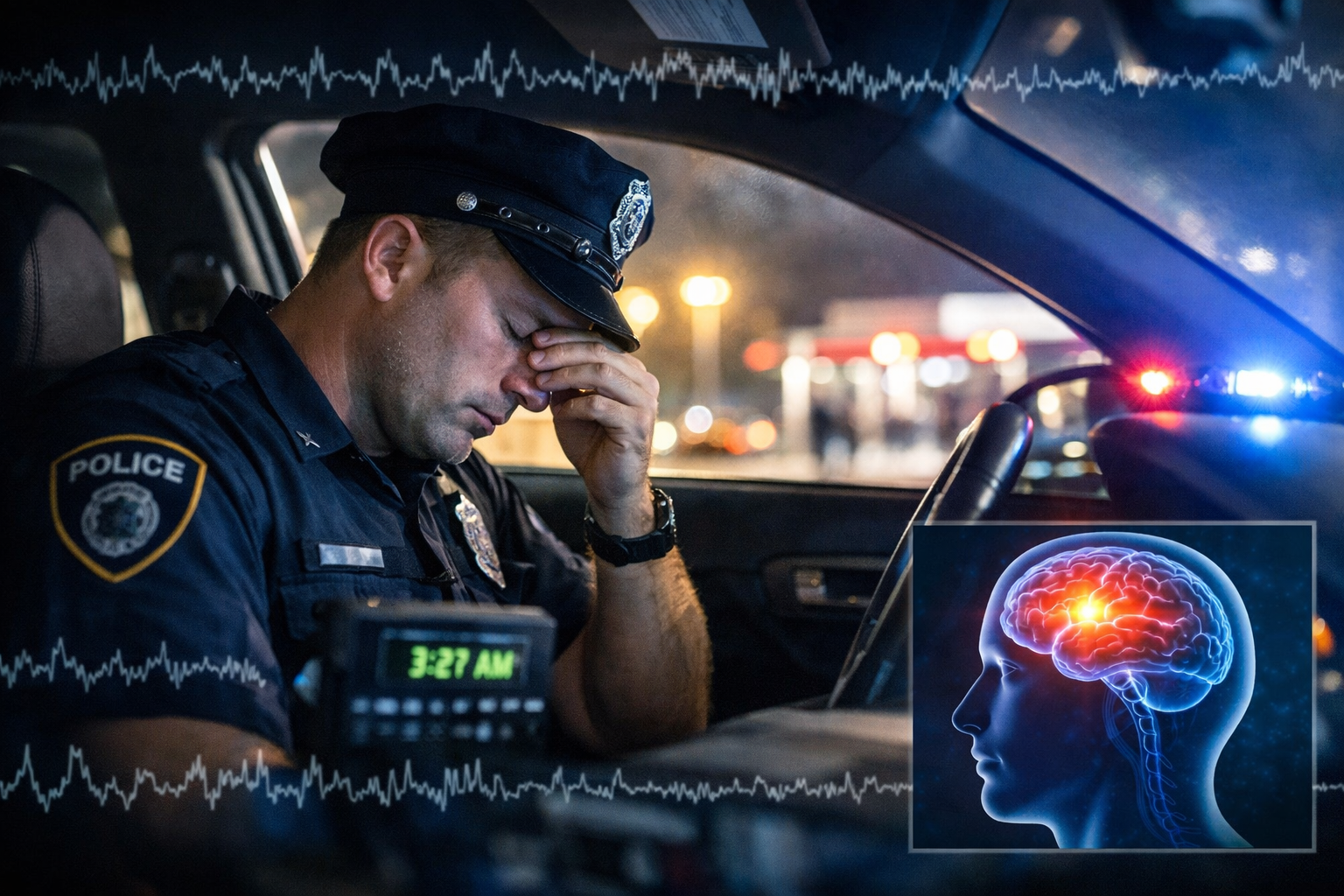
Every department knows shift work is hard. Fewer understand how hard — or why. The research on rotating schedules and law enforcement isn't a collection of vague warnings about sleep hygiene. It's a body of evidence about what happens to human physiology when it gets systematically misaligned from the environment it evolved for. This article breaks down what the science actually shows, why law enforcement schedules amplify every risk factor, and what that means for the officers living it.
The Circadian System Doesn't Negotiate
The human body runs on a roughly 24-hour internal clock — the circadian rhythm — governed primarily by light exposure and anchored to a consistent wake-sleep cycle. This system doesn't just regulate when you feel tired. It coordinates immune function, hormone release, cardiovascular activity, metabolic rate, cellular repair, and cognitive performance. When you work nights or rotate between shifts, you're not just fighting fatigue. You're fighting your own biology.
The core problem is that the circadian clock is slow to adjust and sensitive to disruption. Unlike jet lag — where the body recalibrates over several days and returns to baseline — rotating shift schedules don't give the system time to adapt before the cycle changes again. Officers on compressed schedules (four days on, four days off) or rotating between days and nights may spend their entire careers in a state of perpetual partial misalignment.
The National Institute for Occupational Safety and Health classifies shift work as an occupational hazard. The research behind that designation is worth understanding.
What the Data Shows on Physical Health
The cardiovascular findings are the most consistent in the literature. A landmark meta-analysis published in the BMJfound that shift workers — compared to day workers — had a 23 percent higher risk of myocardial infarction and a 5 percent higher risk of ischemic stroke. For law enforcement officers, who already carry elevated cardiovascular risk due to the physiological demands of the job itself, rotating schedules add a compounding layer of exposure.
The mechanisms aren't speculative. Circadian misalignment disrupts cortisol regulation, elevates inflammatory markers including C-reactive protein and interleukin-6, and impairs glucose metabolism. Chronic night work is associated with increased insulin resistance and higher rates of metabolic syndrome — a cluster of conditions that includes elevated blood pressure, abdominal obesity, abnormal cholesterol, and high blood sugar. When these conditions develop in officers who also experience chronic stress activation on the job, the interaction is not additive. It's synergistic.
Sleep Disorders
Sleep disorder rates among law enforcement are significantly elevated. Research published in the Journal of Occupational and Environmental Medicine found that nearly 40 percent of officers screened positive for at least one sleep disorder, with shift work serving as one of the primary predictors. Obstructive sleep apnea, insomnia, and circadian rhythm sleep disorders are all overrepresented in this population.
Metabolic and Gastrointestinal Effects
The gastrointestinal picture is similarly well-documented. Night shift workers experience higher rates of peptic ulcers, irritable bowel syndrome, and gastroesophageal reflux — a consequence of eating patterns that are out of sync with the metabolic rhythms that govern digestion. Combined with the metabolic syndrome risk, the long-term physical cost of a career on rotating shifts extends well beyond what most officers are told at the academy.
What the Data Shows on Cognition
Sleep deprivation research is unambiguous on one point: the impairments people experience are worse than they believe they are. Studies using psychomotor vigilance testing consistently show that individuals operating on insufficient sleep dramatically overestimate their own alertness and functional capacity. The subjective sense of "feeling fine" doesn't track with objective performance degradation after 17 to 19 hours of wakefulness — a range that begins to produce impairment equivalent to a blood alcohol concentration of 0.05 percent.
For law enforcement, this creates a specific operational problem. Officers making use-of-force decisions, reading threat cues, conducting interviews, or operating a vehicle at the end of a double shift are doing so with a cognitive apparatus that is meaningfully impaired — and they may have no reliable way to know it.
Executive Function
The prefrontal cortex — the region responsible for impulse control, risk assessment, and decision-making under uncertainty — is among the most sleep-sensitive areas of the brain. Fatigue impairs the capacity to suppress automatic or habitual responses in favor of deliberate, contextually appropriate ones. In a use-of-force scenario or a de-escalation call, this is not a marginal concern.
Emotional Regulation
Research from the University of California Berkeley showed that sleep-deprived individuals exhibit a 60 percent amplification in amygdala reactivity — the threat-detection center of the brain — while simultaneously showing weakened prefrontal inhibition of that reactivity. The result is a state in which perceived threats register more intensely and the cognitive brake on reactive behavior is less effective. Officers on rotating schedules or reduced sleep are not simply tired. They are operating with a measurably altered emotional profile.
Working Memory, Attention, and Processing Speed
Working memory and sustained attention both degrade significantly with sleep restriction — affecting everything from situational awareness to accurate report writing to the retention of information during a dynamic incident. Reaction time slows in proportion to sleep debt accumulation. Research from the Walter Reed Army Institute found that performance degradation from chronic partial sleep loss — five to six hours per night over a period of weeks, a pattern familiar to many officers on compressed schedules — can become indistinguishable from total acute sleep deprivation.
Why Law Enforcement Schedules Make This Worse
General shift work research captures the baseline risk. Law enforcement amplifies it through several specific mechanisms.
Schedule Compression Without Adequate Recovery
The prevalent use of 10- and 12-hour shifts, often with mandatory overtime, results in officers working longer individual shifts while simultaneously maintaining a nominal schedule that creates the appearance of adequate days off. Whether those days off actually produce biological recovery depends heavily on whether sleep quality and quantity are sufficient — and for many officers, they aren't.
The Cortisol Problem
Policing is a stress-exposure profession. Chronic activation of the hypothalamic-pituitary-adrenal axis, which regulates the stress response, disrupts sleep architecture even when officers have the opportunity to sleep. Officers who come off high-stress shifts carrying elevated cortisol and adrenaline often cannot achieve the slow-wave and REM sleep that drives cognitive restoration, even if they sleep for eight hours.
Exposure Timing
Officers working nights are frequently exposed to high-intensity critical incidents during the biological low point of their alertness curve. The 3 a.m. to 6 a.m. window represents the circadian nadir: the period of lowest core body temperature, lowest alertness, and highest vulnerability to performance degradation. This is not incidental to when law enforcement calls tend to escalate.
What This Means for Departments
The research doesn't support any single silver-bullet scheduling solution. Fixed shifts tend to outperform rotating schedules for physiological adaptation, but fixed night shifts carry their own long-term health burden. What the evidence does support is a set of structural principles that most law enforcement organizations currently underutilize.
Direction of Rotation
Forward-rotating schedules — day to evening to night, following the body's natural tendency to delay rather than advance — produce less circadian disruption than backward rotation. Departments that rotate backward (night to evening to day) are amplifying an already significant physiological cost.
Recovery Intervals
The interval between shift rotations is one of the most modifiable factors in schedule design, and it receives relatively little attention. Rotating faster (every two to three days) keeps the circadian clock in perpetual limbo. Rotating slower (every three to four weeks) allows partial adaptation. Neither is ideal, but the difference in health and performance outcomes is meaningful.
Policy Culture
Departments that permit strategic napping, provide education on sleep hygiene specific to shift workers, and reduce stigma around fatigue disclosure tend to see better outcomes than those that treat scheduling as purely an administrative function. The research on officer fatigue is also directly relevant to liability — studies of officer-involved shootings and use-of-force incidents have identified fatigue as a contributing factor in a subset of cases. Departments that ignore this data are not simply accepting a wellness problem. They are accepting operational and legal exposure.
What Officers Can Do in the Meantime
Systemic change is slow. In the meantime, officers on rotating schedules can work with, rather than against, some of the biology.
Light Exposure
Light is the primary circadian signal. Officers transitioning to night shift can delay their biological clock by seeking bright light in the early part of the night shift and using blackout curtains to limit morning light exposure before their sleep window. This is not a complete fix, but the research is consistent that strategic light management reduces adaptation time.
Sleep Debt Doesn't Average Out
An officer who sleeps four hours on three consecutive nights cannot compensate by sleeping ten hours on a day off. The prefrontal function deficits associated with sleep restriction can take multiple full nights of recovery sleep to resolve. The gap between felt recovery and actual neurological recovery is itself useful information.
Stimulant Management
Caffeine consumed less than six hours before the intended sleep window significantly reduces sleep quality even when it doesn't prevent sleep onset. The subjective experience of sleeping after late caffeine use feels like rest. The EEG doesn't agree.
The Gap Between What Departments Know and What They Do
The science on shift work, fatigue, and performance impairment in law enforcement is not obscure. It has been replicated, reviewed, and synthesized in peer-reviewed literature for decades. What has not kept pace is the institutional translation of that evidence into scheduling policy, officer education, and operational protocols.
The night shift tax is real. It is cumulative. It operates at both the individual and organizational level. And it is, to a meaningful degree, modifiable — not by pretending the biology doesn't exist, but by designing around it with the same rigor applied to any other operational risk.
Treating fatigue as a character weakness rather than a physiological condition is expensive. The data is specific enough, at this point, that continuing to do so isn't ignorance. It's a choice.
Threat Ready LE is an independent publication built for law enforcement professionals who want to understand the research behind the job — not just the doctrine. We cover threat recognition, officer wellness, mental health, de-escalation, and the science of crisis response.
Frequently Asked Questions
How many hours of sleep do officers on night shift actually need?
The same as everyone else — seven to nine hours for most adults, according to the American Academy of Sleep Medicine. The difference is that night shift officers face significant structural barriers to getting it: daylight during their sleep window, family and social obligations timed to a day schedule, and a body clock that resists sleeping at biologically "wrong" times. Hours in bed and hours of restorative sleep are not the same thing, and for night shift officers, the gap between them is often wider than they realize.
Is rotating shifts worse than working a permanent night shift?
For most physiological outcomes, yes. A fixed night schedule allows the body to partially adapt over time — though it never fully inverts the circadian clock for most people. Rotating schedules prevent any meaningful adaptation by resetting the clock before it stabilizes. If a department must use nights, fixed night assignments generally produce better long-term health outcomes than frequent rotation, though permanent nights carry their own elevated risk profile that shouldn't be minimized.
How quickly does cognitive performance degrade on a night shift?
Meaningful degradation begins within the first few hours of the circadian nadir — roughly 3 a.m. to 6 a.m. for most people — even in officers who feel alert. After 17 to 19 continuous hours of wakefulness, reaction time, decision-making accuracy, and emotional regulation are impaired at a level comparable to a blood alcohol concentration of 0.05 percent. The critical issue is that officers often cannot accurately self-assess this impairment. Feeling alert is not a reliable indicator of actually being alert.
Why do officers on night shift tend to gain weight?
Several mechanisms work together. Circadian misalignment disrupts the hormones that regulate hunger — leptin (which signals fullness) decreases and ghrelin (which signals hunger) increases when sleep is insufficient. Eating late at night, outside the window when the body is primed for metabolic activity, is associated with greater fat storage. Night shift workers also tend to have less access to prepared healthy food and lower physical activity during their waking hours. The result is a metabolic environment that makes weight management significantly harder independent of diet choices.
Does napping before a night shift actually help?
Yes — this is one of the more well-supported practical interventions in the shift work literature. A 90-minute nap taken in the late afternoon before a night shift has been shown to improve alertness, reaction time, and performance during the early morning hours. Strategic napping isn't laziness. It's a recognized fatigue countermeasure used in aviation, medicine, and military operations. Departments that prohibit or discourage pre-shift napping are working against evidence-based practice.
How long does it take to recover after switching back to a day schedule?
Longer than most officers assume. Research suggests full circadian realignment after a shift rotation takes approximately one day per hour of time zone equivalent shift — meaning a complete day-to-night reversal may take a week or more of consistent sleep timing to resolve. Officers who rotate every few days never reach this baseline. The cumulative effect over a career is a persistent state of partial misalignment that becomes normalized but never neutral.
Does the direction of shift rotation really matter that much?
It does, and the effect is consistent enough in the research that it represents a low-cost, high-impact scheduling change for departments willing to look at it. The human circadian clock naturally drifts later — it's easier to stay up late than to go to bed early. Forward rotation (days → evenings → nights) works with that tendency. Backward rotation (nights → evenings → days) fights it, requiring the body to advance its clock rather than delay it, which takes longer and produces more disruption. Some research suggests forward-rotating workers report better sleep quality, lower fatigue, and fewer health complaints than backward-rotating workers on otherwise identical schedules.
Are younger officers less affected by shift work?
Somewhat, but less than the assumption suggests. Younger officers generally recover faster from acute sleep loss and have more physiological reserve. However, the long-term cardiovascular, metabolic, and neurological effects of shift work are largely a function of cumulative exposure — meaning the damage builds regardless of resilience at any single point. Officers who start their careers dismissing fatigue as manageable often do so without understanding that the cost is being deferred, not avoided.
What should officers tell their doctor about their schedule?
Exactly what it is — including hours, rotation pattern, typical sleep duration, and any symptoms of sleep disruption. Many primary care physicians underscreen law enforcement patients for shift work disorder, sleep apnea, and circadian-related metabolic issues because they don't ask about schedule specifics. Officers who proactively describe their schedule give their provider the information needed to interpret bloodwork, blood pressure readings, and other markers in context. A blood pressure reading at a noon appointment means something different for an officer who just woke up from a night shift than for someone eight hours into a day shift.
Can departments be held liable for fatigue-related incidents?
This is an evolving area of case law, but the short answer is that liability exposure exists and is growing. Departments that have documented fatigue policies, mandate minimum rest periods, and train supervisors to recognize and respond to fatigue impairment are in a meaningfully different position than those with no framework at all. When use-of-force incidents or vehicle accidents involve officers at the end of extended shifts or irregular rotations, fatigue becomes a discoverable factor in litigation. Treating shift fatigue as a purely personal responsibility rather than an organizational risk management issue is increasingly difficult to defend.